

Bachelor of Arts in Communication Studies
Major in communications and make your message matter.
Get Started Today
Ready to learn more about Concordia University Irvine?
Complete this form, and an admissions counselor will connect with you.
"*" indicates required fields
Become a Strong Communicator
Communication moves the world forward, from building relationships to leading organizations. In the B.A. in Communication Studies at Concordia University Irvine, you’ll develop communication, critical thinking, and problem-solving skills that are valuable in nearly every field.
As a communications major, you’ll explore how people interact across contexts and open doors to an array of careers, including social media, journalism, business, PR, marketing, law, HR, ministry, and education. Wherever your callings guide you, you’ll learn how to engage others with clarity, confidence, and compassion.
Career Relevant
Gain real-world skills for a life of service and leadership.
Collaborative Classes
Learn in classes with a 15:1 student-to-faculty ratio.
Opportunity Awaits
Access internship and career opportunities across Southern CA.

Getting Started
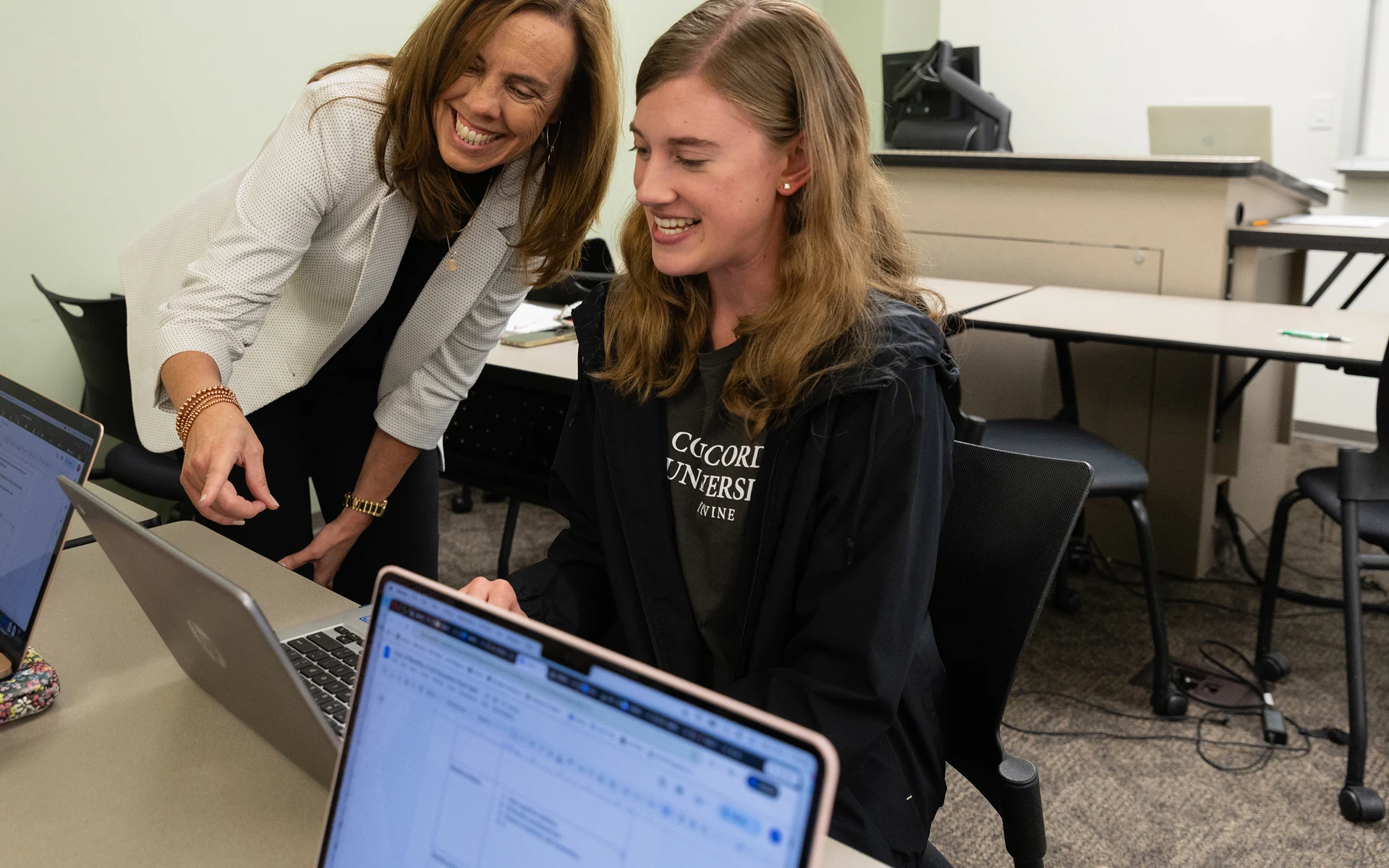
A major in communication studies prepares you to express ideas clearly, connect with diverse audiences, and navigate complex interpersonal and organizational dynamics. At Concordia, you’ll study communication theory, research methods, media literacy, and rhetoric while applying what you learn to real-world settings.
You’ll also have the flexibility to choose courses that align with your interests, such as digital media, public speaking, rhetoric, and interpersonal and organizational communication.
Next Start
January 11, 2027
Curriculum
Core Curriculum (Sample Courses):
- COM216 – Interpersonal Communication
- COM280 – Theories of Human Communication
- COM321 – Digital Media Communication
- COM324 – Intercultural Communication
- COM340 – Rhetorical and Persuasive Theories
- COM400 – Communication Capstone
- COM488 – Communication Research Methods
View the Concordia University Irvine Online Catalog for a full list of courses.
Those who’ve earned a communications degree from Concordia are able to:
- Explain and apply historical and modern theories of human communication.
- Analyze how culture and context influence communication.
- Demonstrate competency in written and oral communication.
- Articulate the origins and trends of mediated communication.
- Analyze arguments and discourse intended to influence beliefs, attitudes, values, and practices.
- Demonstrate competency in systematic inquiry.
Tuition and Fees
At Concordia, we understand that investing in your education is a significant decision. That’s why we offer a variety of scholarships and financial aid options to help make your academic journey more affordable. In fact, 100% of our students receive some form of financial assistance! View tuition costs and fees for undergraduate programs.
Admission Requirements
View the Application page for full details on application and admission requirements.
Nationally Recognized Q&I Curriculum
Concordia University Irvine is among a distinctive group of universities that offer a comprehensive liberal arts curriculum for all of its students. Our nationally recognized Enduring Questions & Ideas curriculum (Q&I, for short) is carefully crafted so that you discover the purpose of a liberal arts education — to grow intellectually, ethically, and spiritually.

Internships
Concordia communications majors gain practical experience through internships that build confidence, professional networks, and career-ready skills. Internships help you apply what you’ve learned in class — from crafting messages to managing media relations — in real-world settings.




Career Outcomes
Because communication plays a vital role in every industry, you’ll have plenty of opportunities in the job market. Graduates from the communications studies program at Concordia pursue diverse paths in media, business, education, ministry, and more.
According to the U.S. Bureau of Labor Statistics, about 109,500 media and communication roles are projected each year through 2033, which means there will be a consistent demand for skilled communicators.1
Academic Opportunities
As a communication studies major, you can combine your degree with a minor or second major in a complementary area such as:
Students are also encouraged to study abroad and gain cross-cultural communication skills in global contexts.
Extracurricular Activities
Communication Studies students thrive in a community that values creativity, collaboration, and leadership. You can join organizations, participate in competitions, and contribute to campus media.
Opportunities include:
- COMM-unity Club
- President’s Academic Showcase
- Around the World in a Semester®
- Concordia Courier
- Yearbook
- Forensics teams
- Lambda Pi Eta Honor Society
Life at Concordia
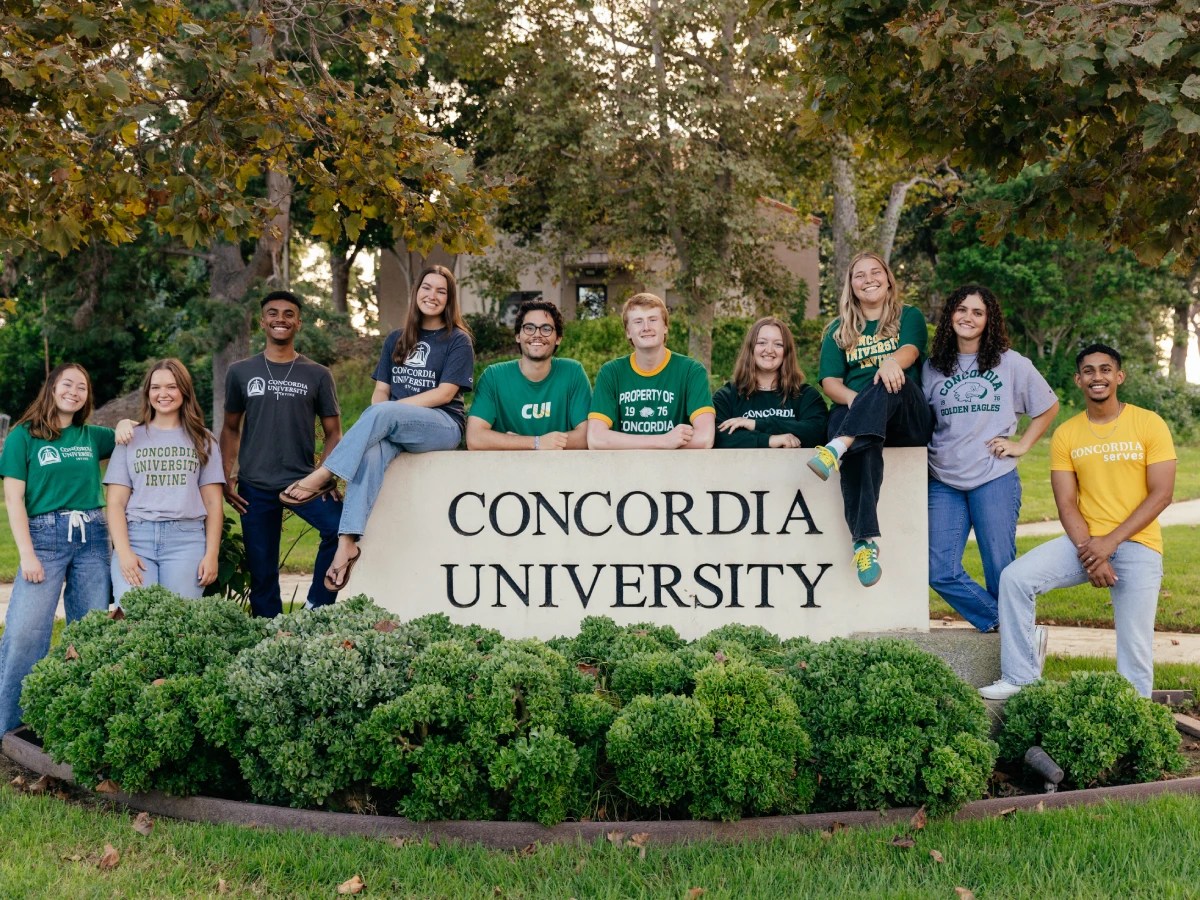
Join a community where you’re free to explore your interests and pursuits, make relationships that last a lifetime, and develop your own relationship with God. What will you explore?

Explore Financial Aid
Reduce your tuition costs with financial aid — with help from a team that wants to make your time at Concordia as affordable as possible.
Meet Our Faculty
-

Konrad Hack
Assistant Professor of Communication Studies, Director of Forensics



FAQs
What can you do with a communications major?
Just about anything! Communication majors can work in just about any field, but they are especially primed to work in marketing, public relations, management, law, education, journalism, and more. In fact, some of the top occupations for those with a communications degree are human resources specialists, producers and directors, marketing specialists and managers, chief executives, lawyers, and teachers.1
Is it hard to get a job in communication?
Communication is a universal skill. With more than 109,000 media and communication openings projected annually through 2033, you’ll find opportunities in every sector, from digital media to corporate communications.1
Is a communications degree worth it?
Absolutely. Strong communicators are indispensable in the modern workplace. A communication studies degree helps you express ideas clearly, think critically, and connect across cultures — skills that are essential for leadership, teamwork, and service.
Related Programs
-

Cybersecurity
Prepare to confront today’s digital threats with a Bachelor of…
-

Psychology
Study the mind and explore human behavior with a psychology…
-

Music
Develop your musical talent and inspire others with a music…
-

Mathematics
Join a fast-growing field when you earn an in-demand math…
-

Liberal Arts
Prepare for all of your life’s callings with a liberal…
-

History and Political Thought
Learn from the past to lead with understanding and purpose.
-

Graphic Design
Become a strategic, visual storyteller as a graphic design major.
-

English
Learn to think deeply and write clearly with an English…
-

Engineering
Imagine, innovate, and create with an engineering degree.
-

Digital Media Studies
Become a responsible, dynamic communicator in today’s digital age.
Sources
1U.S. Bureau of Labor Statistics, U.S. Department of Labor, on the internet, at:
- https://www.bls.gov/ooh/media-and-communication/home.htm (viewed Jan. 8, 2025),
- https://www.bls.gov/ooh/field-of-degree/communications/communications-field-of-degree.htm (viewed Jan. 8, 2025).
Cited projections may not reflect local and/or short-term economic or job conditions and do not guarantee actual job growth.