

Enduring Questions & Ideas
Explore life’s toughest questions through our nationally-recognized Q&I curriculum.
A Curated Academic Experience for a Changing World
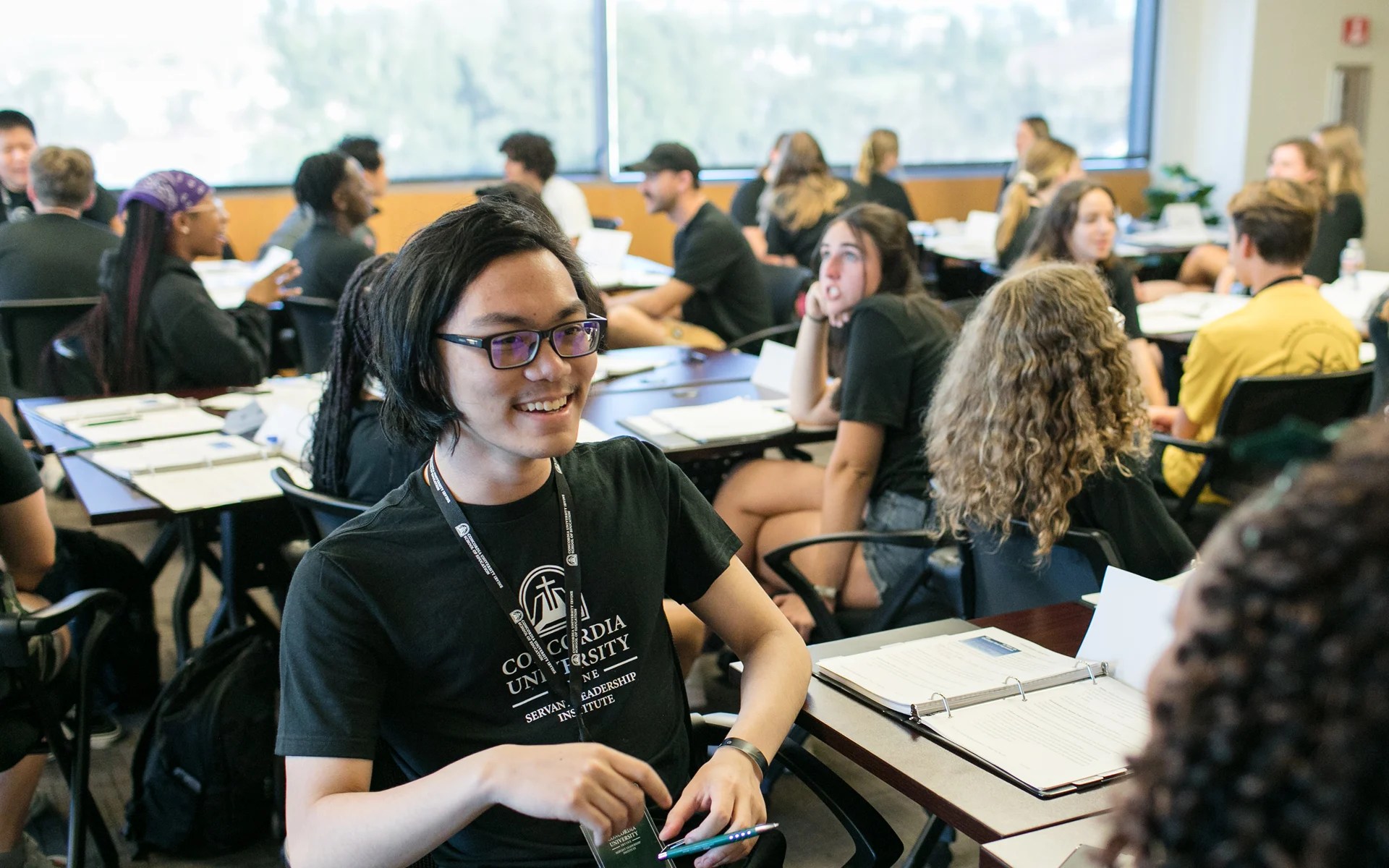
At Concordia University Irvine, we believe that general education is more than a checklist of disconnected distribution courses — it’s a carefully designed program with a higher purpose. Our signature Enduring Questions & Ideas (Q&I) curriculum helps every student grow intellectually, ethically, and spiritually for their vocations in work, family, society, and the church.
Through Q&I Core and Exploration courses, you’ll wrestle with life’s foundational questions and ideas. You’ll be challenged to read great works closely, think critically and creatively about problems, communicate your ideas effectively in writing and speech, and connect learning, faith, and life together in significant ways.
This is an education that endures changes. Majors, jobs, and technology change. Specialized skills can quickly become outdated. Education that develops your abilities to reason, imagine, interpret, synthesize, communicate, and apply learning to life in wise and ethical ways is one that lasts. It is a durable, desirable education that helps you excel in your major and work. Most importantly, it shapes you. It informs who you are, what a good life looks like, and how to love God and others.
Connecting With the Classics
Concordia is a member of the Association for Core Texts and Courses. Instead of reading textbooks about great ideas, you’ll interact with primary sources, allowing you to “play along” with the great thinkers and artists of the past.
Reimagining Foundational Education
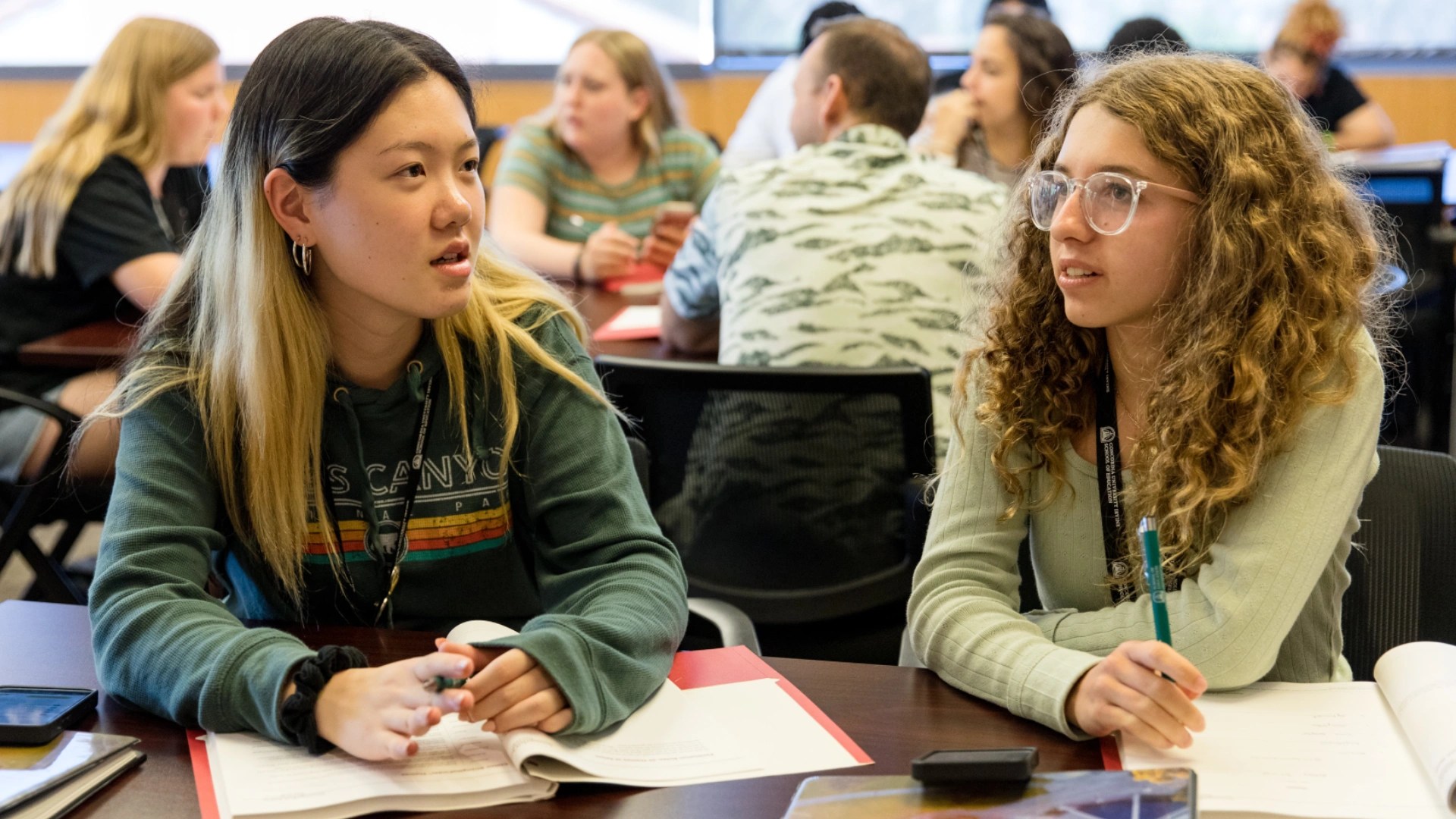
In 2006, we asked a question that would lead to an ambitious transformation of our curriculum: How could Concordia strengthen the entire academic experience and create a shared intellectual foundation, rooted in its Lutheran heritage, for the entire campus community?
The result was the Enduring Questions & Ideas Core, a groundbreaking curriculum that redefined the undergraduate experience and set Concordia apart from most other higher education institutions in the U.S. Instead of piecing together general education courses, every student takes a series of classes in sequence so that they can build a foundation of knowledge and create strong learning habits together.

A Curriculum That Connects Disciplines
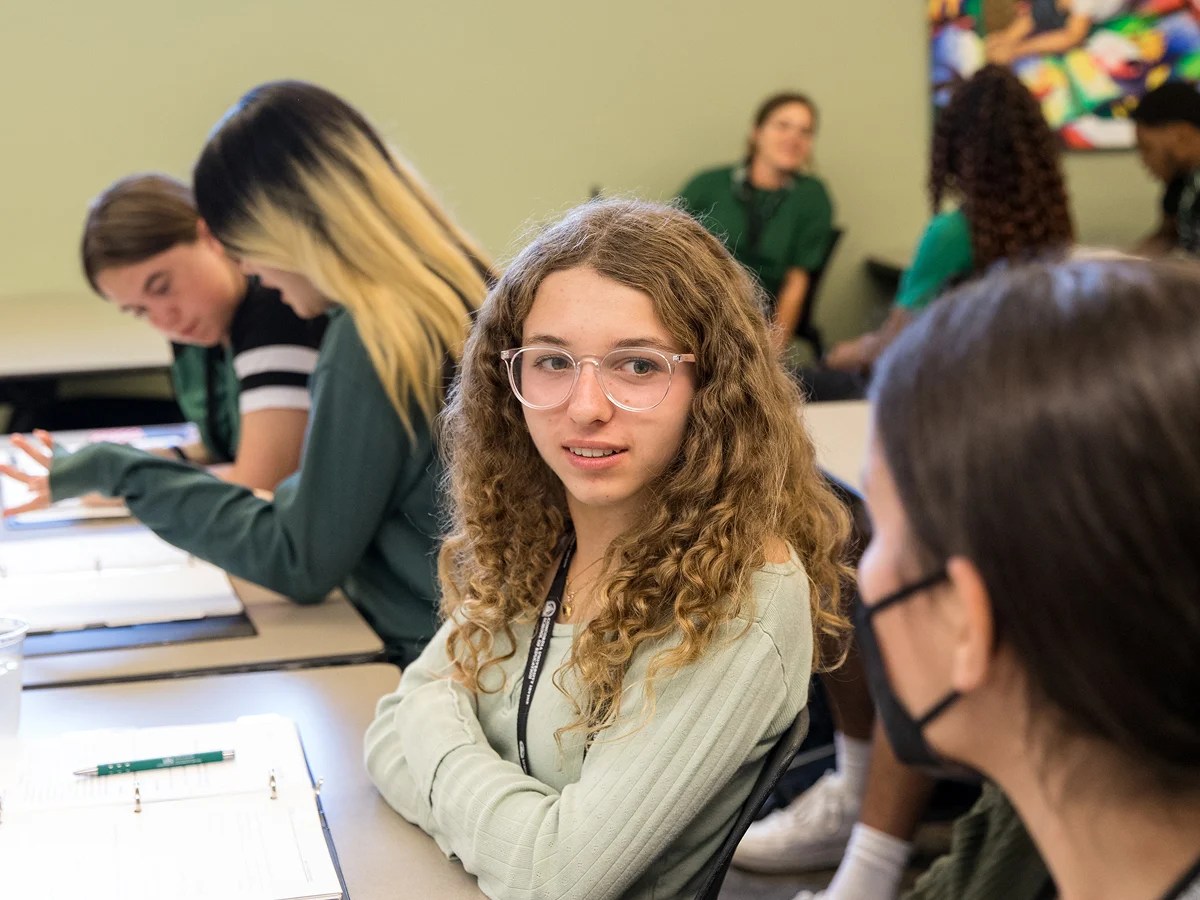
Perhaps the most unique feature of the Q&I Core is its pairing of courses that at first glance don’t seem to go together:
- Biology and Theology
- Mathematics and Philosophy
- History and Literature
Freshmen and sophomores take these courses together and learn to make connections between seemingly disparate subjects.
Why Q&I Matters
We believe that Q&I Core is part of what makes a Concordia education one of the most meaningful, comprehensive, and practically applicable in the country. And data from the NSSE (National Survey of Student Engagement) illustrates why.
Current NSSE data show that more than 80% of seniors see that their education at Concordia–from Q&I through the major–helped them grow a lot in thinking critically and analytically, communicating clearly and effectively, working effectively with others, and developing and clarifying a code of ethics.
According to the National Association of Colleges and Employers (NACE), these indicators mirror qualities that employers find most desirable in potential employees:
- Problem-solving skills
- Analytical skills
- Communication skills
- Interpersonal skills
- Ability to work in a team
- Strong work ethic
Our graduates go on to serve and lead at organizations such as NASA, Amazon, the U.S. State Department, Disney, and Nike — using their Q&I experience to think deeply and act wisely in every vocation.
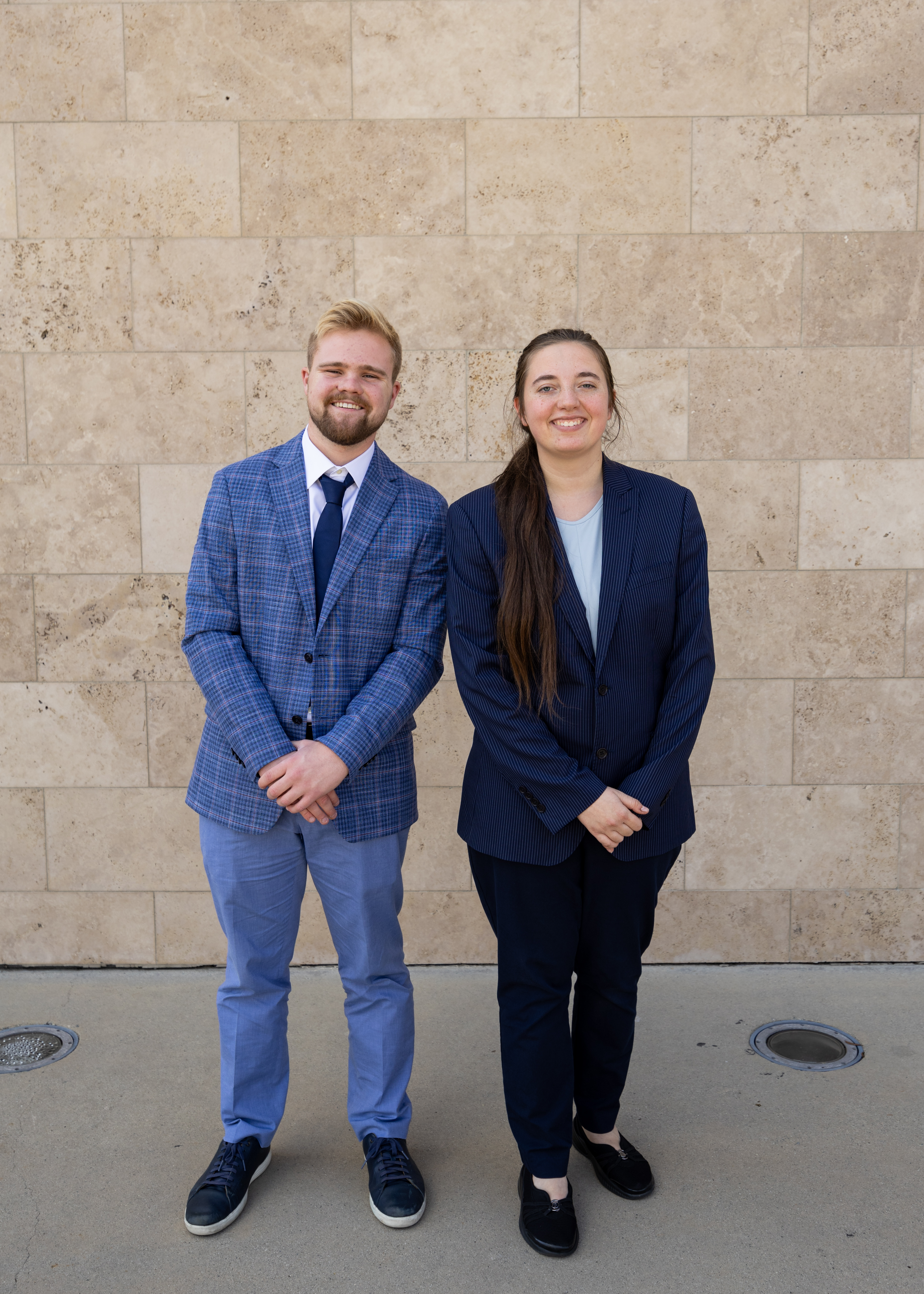
The Q&I Difference
Your major prepares you for a field. Q&I prepares you to stand out in it.
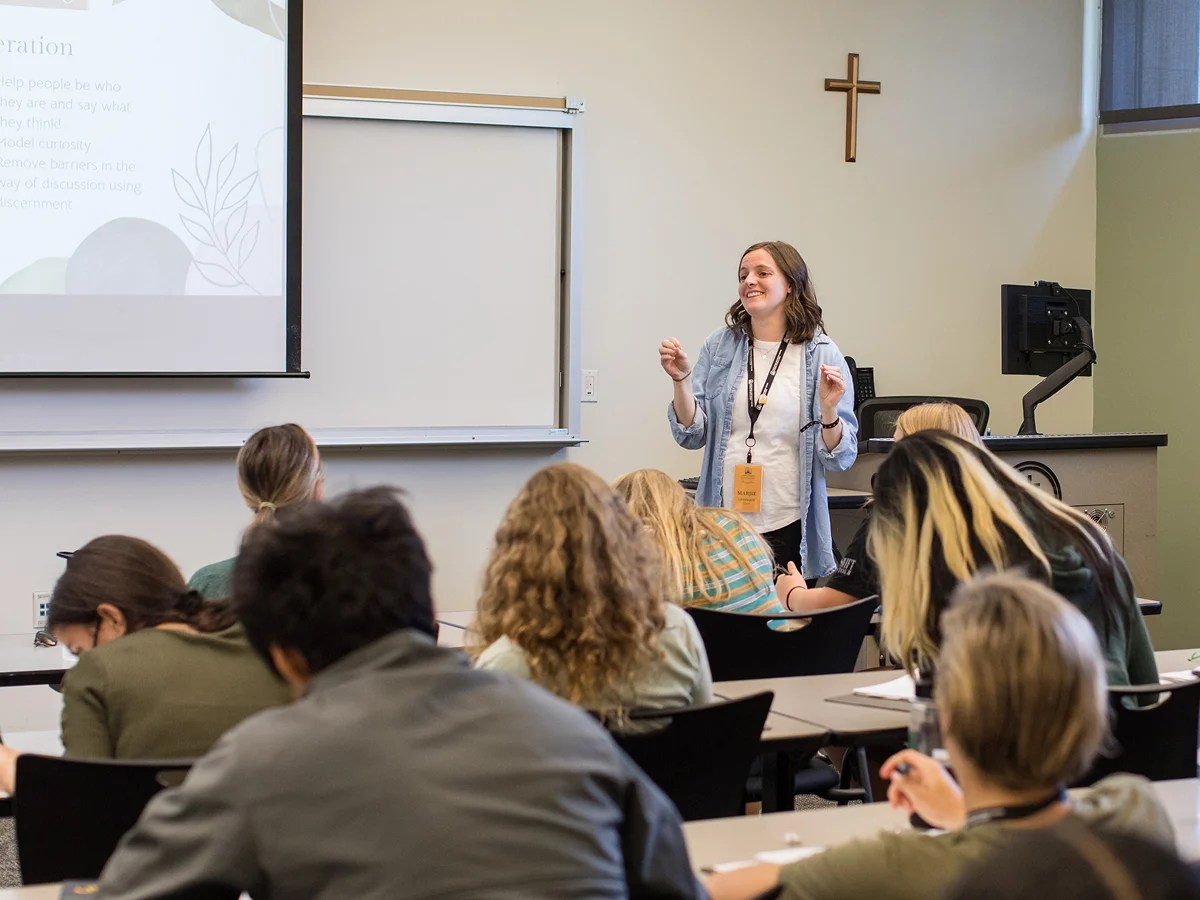
Explore Our Q&I Curriculum
Our Q&I curriculum is composed of Core and Exploration courses. View our academic catalog for listings and descriptions of Q&I courses.
Q&I Core Courses
Q&I Core courses are taken together in linked pairs: biology with theology, mathematics with philosophy, and history with literature. These classes typically have about 25 students, giving you a close-knit learning community. Some Core classes also offer one-on-one tutorials where you meet with your professors to discuss your papers and develop your ideas.
What are Truth, Goodness, and Beauty? | Math and Philosophy
Philosophers and mathematicians in Ancient Greece found themselves wondering about some of the same questions:
- What is truth? How can I identify something that is certain, valid, and complete, and must I cultivate certain virtues to find it?
- What is beauty? What are the objective attributes that identify beauty, and why do some objects look beautiful while others do not?
- What is good? What and where is goodness in the world, and why should I pursue it?
The Core Mathematics 101 and Core Philosophy 101 courses engage you in these same questions by examining great works and ideas. You’ll come to recognize the individual and social significance of these questions in your own life, and you’ll be challenged to read carefully, think rigorously, and write well in order to develop reasoned answers to them.
What is Truth? | Biology & Theology
For as long as people have been able to communicate with each other, they have asked this question as a way to grapple with the idea of reality. Simple answers like “what is factual” or “what isn’t false” don’t stand up under deeper thought.
While the sciences and religion both make strong claims about the objectivity of truth, no truth is absolutely neutral, objective, or without the influence of a culture or intellectual patterns. After all, we can change our minds or reevaluate our cultures and patterns. That’s why we ask “What is truth?” in Core Biology 101 and Core Theology 101 — to facilitate and encourage broad and deep conversations across disciplines.
In these courses, you’ll be given the space to critically evaluate your biases, challenge the idea that there is a completely neutral, secular point of view from which someone might investigate the world, and allow you to understand the truth of this life’s experiences in light of the Truth incarnate: the person of Jesus Christ.
What is Freedom? | History & Literature
Freedom is difficult to define. Usually, it’s defined by what it isn’t — like coercion, slavery, imprisonment, and tyranny. Implementing freedom is even more difficult because its very nature is conditional and, at times, contradictory.
In the Core English 203 and Core History 203 courses, you’ll consider questions like these:
- What is freedom when it conflicts with security, order, justice, or equality?
- At what point do the conditions and limitations on freedom actually destroy it?
- To what extent should we sacrifice other good features like security or equality for the sake of freedom?
These courses try to make sense of the modern world by engaging with great works of literature and political philosophy from the last four centuries, looking into how writers, philosophers, and historical figures grappled with these and other problems posed by the quest for freedom.
Q&I for Transfer Students
For transfer students with 30 or more semester units, we offer a unique pair: philosophy with theology. In these courses, you will explore the question of what it means to be human.
What Does It Mean to be Human? | Theology and Philosophy
What is the human condition? Can a human being know anything about God with certainty? Do we have souls? How about free will? What does it mean for a human being to be the object of redemption by an infinitely merciful Savior? How should a human being live and why? Which virtues, if any, are important in human life?
Answers to these and similar questions have enormous consequences. Core Theology 200 and Core Philosophy 200 help students develop reasoned answers to questions such as these by engaging the Scriptures and classic texts to examine what it means to be human.

Q&I Exploration Courses
Q&I Exploration courses keep the conversation going and give you a selection of courses to take to address each big question. In these classes, you’ll continue to wrestle with the foundational questions of truth, goodness, beauty, and human purpose, applying them to new disciplines such as economics, psychology, creative writing, astronomy, and more.
Throughout Q&I, you’ll develop into a wise, honorable, and cultivated citizen who can tackle life’s challenges and use your gifts to serve society and the church.
“Who Do You Say That I Am?”
The biggest questions people ask are spiritual ones: Who am I? Where did I come from? Is there such a thing as truth? Is God knowable?
Jesus asked His disciples the most important question: “Who do you say that I am?” (Mark 8:29). In this course, you’ll explore that enduring question and all it implies about identity, purpose, and revelation. You’ll examine how God makes Himself known and how people have responded throughout history, engaging both Scripture and human reason to better understand faith in the modern world.
How Shall I Live?
What does it mean to live well? Health may be the absence of disease, but wellness is a system of living that maximizes your potential through self-responsibility. You can be intellectually well but physically unwell, or socially well but spiritually unwell. In these courses, you’ll begin to view the person — or the community — as a whole and ask what it means to flourish as a whole person.
Courses that address this question consider wellness in many dimensions: spiritual, vocational, physical, emotional, ethical, political, social, and economic. You’ll explore what it means to live well and serve well, recognizing that wholeness involves stewardship of every part of life.
Why Art?
Art can entertain, be profane, or be profound. Art can also move people to significant actions, to personal peace or angst, or to community or conflict. A cultivated citizen is able to engage with various art forms to reflect and affect an inner sense of being, personal relations, and faith expressions.
In these courses, you’ll engage with visual art, theatre, music, and other creative expressions to examine questions such as:
- What is art?
- How is art good or useful?
- What role does art play in shaping and/or reflecting culture?
- What role does our aesthetic response play in understanding art?
- How do creativity and the creative process relate to your vocation(s)?
- How does a Christian responsibly experience or participate in art?
- How does the beauty and ugliness of art help us to understand God’s Law and Gospel?
You’ll consider how creativity, discipline, and faith come together in shaping both society and the soul.
What Is Eloquence?
Beyond speaking and writing well, eloquence is the ability to move another’s soul toward good by sharing the truth in love. To be eloquent, you must think critically and articulate your thoughts clearly.
In these courses, you’ll study how to communicate with wisdom and grace. You’ll learn how reason (logos), emotion (pathos), and character (ethos) work together to make speech both powerful and ethical. Through practice and reflection, you’ll grow as a communicator who can lead and serve through words that enlighten, persuade, and build up others.
How Do I Understand Nature?
Modern science helps us explore the universe and understand our place in it, but it also raises profound questions about meaning and faith:
- What is truth? What is science? How do faith and science relate?
- Can I know the reality of God like the reality of the atom?
- How should humanity interact with nature?
These courses explore how our worldviews shape our understanding of the natural (and supernatural) world. Sitting with these questions will help you know why you believe what you know about nature and how to articulate your thoughts in an educated manner.
Who Am I and Who Are They?
Living in a good society and being a good citizen begins with understanding ourselves — and how we relate to others.
In these courses, you’ll explore the interplay between self and other: how culture, history, and society shape our identities and relationships. You’ll examine issues of justice, empathy, and responsibility, gaining insight into what it means to live wisely and compassionately in a diverse world.
Ready to Explore Life’s Toughest Questions?
Request more information to learn about how our Q&I curriculum can help you grow personally, professionally, and spiritually.