


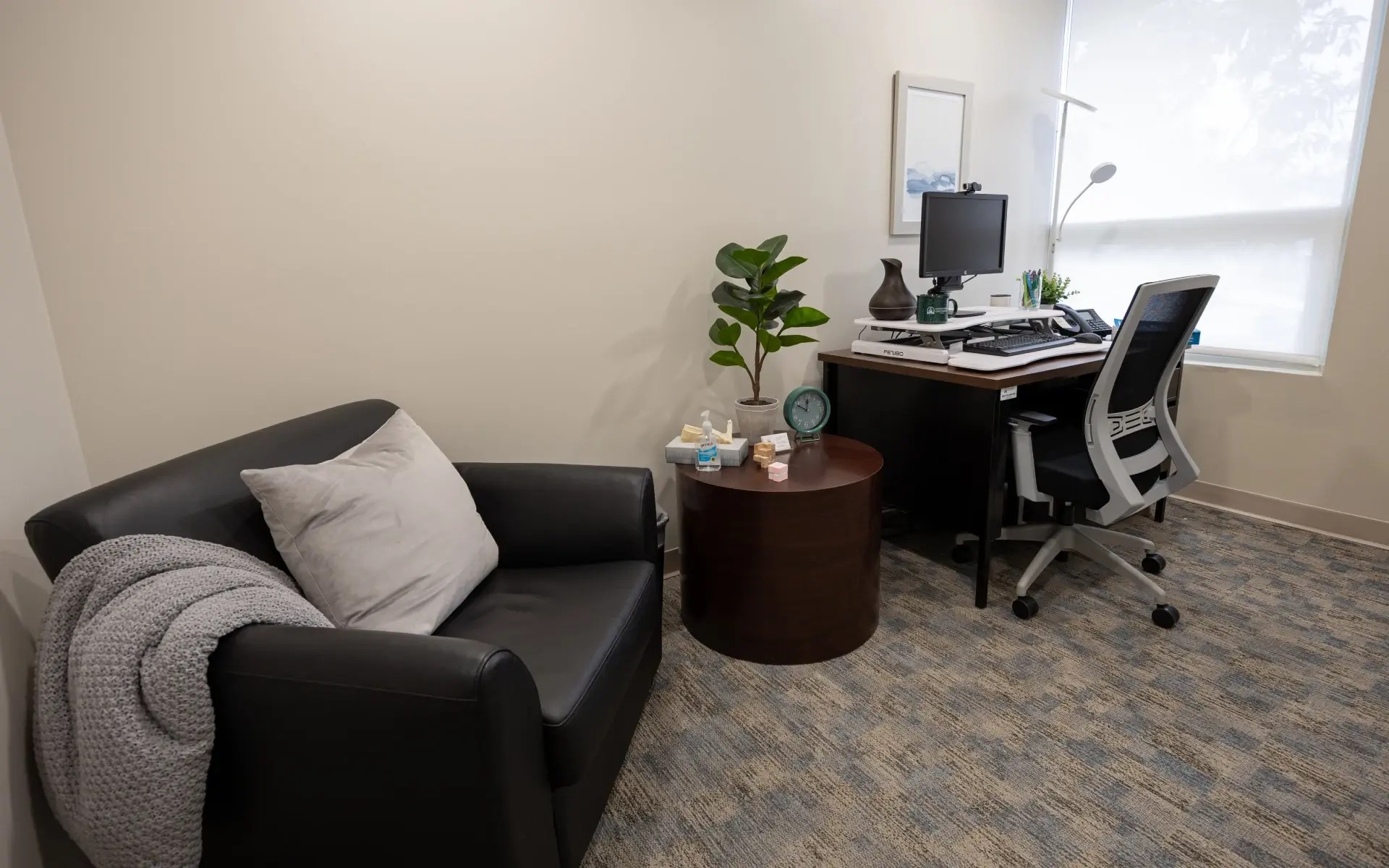
Counseling and Psychological Services (CAPS)
Fostering Mental Health & Well-being
Through psychotherapy and psychoeducation, CAPS supports students in developing the knowledge, insight, and skills needed to enhance mental health and well-being. Counseling may assist students in:
- Developing healthy coping strategies
- Managing emotional responses
- Strengthening critical thinking and decision-making skills
- Building effective stress management skills
- Processing and resolving childhood and other traumatic experiences
- Improving family and interpersonal relationships
- Exploring personal beliefs, faith, values, and goals
- Clarifying a sense of purpose and direction

Services Offered
CAPS provides time-limited, short-term counseling services for eligible students. Students who are enrolled in at least 6 units with Concordia University Irvine are eligible to receive services. If you are seeking counseling services through CAPS, you may first be evaluated through an “intake” session to determine the appropriateness for treatment at CAPS.
Individual Sessions
Typically 50 minutes in length. Short-term or long-term services based on assessment, need and availability. This may include referrals to additional services off-campus.
Crisis Intervention
For Emergencies, call 911 or go to your nearest hospital emergency department.
Examples of an emergency:
- I am at immediate risk of taking my own life or hurting someone else.
- I have taken recent steps to end my life, or have an intent, plan and means to do so.
Therapists are available during normal hours of operation to assist in the management of crises occurring on campus. Please ask the front desk staff for a same day crisis care appointment.
Examples of a crisis:
- Suicidal or homicidal thoughts without intent to harm oneself or others.
- Recent sexual assault or other trauma.
- Death of a significant person or companion in your life.
- A personal crisis that needs rapid attention from a therapist.
Couples Counseling
Offered to couples when both partners are currently enrolled students. Typically 50 minutes in length. Short-term or long-term services based on assessment, need and availability. This may include referrals to additional services off-campus.
Helping Hands Coordination
Therapists will provide resources and access to Helping Hands. For more information, please see the Helping Hands page
Walk-in Appointments
Usually a one-time visit, where your concern may be addressed in 1 session. Other reasons include, but not limited to:
- Prompt Support for a non-crisis concern.
- Student will only be available for a few weeks (i.e. leaving back home for a break, graduating from Concordia University Irvine, etc.)
Consultation
CAPS provides consultation services to members of the Concordia University Irvine community in order to be an advocate for students on campus, and attempt to identify pertinent issues and potential concerns within the community that may impede student development.
Referrals
Therapists support our students by offering off-campus referrals and aiding students in utilizing their insurance benefits. Reasons for referral include continuity of care during school breaks and holidays (if a student will be residing out of California) or referral to a therapist who offers a specialty that may benefit the client and level of severity. Other off-campus referrals may be for basic needs, such as food and housing resources.
Students are eligible for these services until they leave school, either through graduation or any form of withdrawal.
Schedule an Appointment
To schedule an appointment with a therapist, follow the steps below to complete and submit the Schedule Availability Form:
- Click the button below to log in to the Student Patient Portal using your E# and password.
- Select Forms
- Select Schedule Availability Form
Once you submit the form, a Wellness Center staff member will contact you to schedule your appointment.
What can I expect on the day of my intake appointment?
- Please have all of your paperwork completely filled out via the patient portal following the directions in your appointment email.(This can be done on your phone or laptop, and may approximately take 15-20 minutes.)
- If you scheduled a telehealth appointment, use the zoom link provided in your appointment email to enter your telehealth session.
- Be prepared to discuss your goals with your therapist. Goals often include changes you would like to experience. Changes can include the elimination of thoughts, feelings, or behaviors which are preventing you from reaching your goals or developing specific skills that would aid you in obtaining your goals. Clients often find it helpful to write their goals down before their first appointment.
Some things you should know
- All visits and records are confidential, with exceptions to limits of confidentiality (will be discussed at your intake appointment).
- Office visit charges: There is a fee of $10 per session for undergraduate students and $25 per session for post-baccalaureate and graduate students.
- Sliding fees are available to students going through financial difficulties
- Students will be charged their regular fee for no-show or cancelling therapy appointments with less than 24 hours notice.
For any questions, please call or email the Wellness Center at (949) 214-3102 and [email protected].
Confidentiality
We take protecting your privacy very seriously. Our staff of therapists operates under the professional conduct standard of the California Board of Behavioral Sciences. Our services are confidential, meaning that we will not disclose information about your treatment to anyone who is not directly involved in your care without your written permission, or as required by law. Confidentiality includes not disclosing information about you or your treatment to your parents or guardian.
CAPS staff adhere to state laws and ethical standards that require all client information disclosed within the session to be kept confidential. To provide effective service, clinicians may consult with other CAPS staff and qualified medical providers at the Wellness Center. Any other release of information requires the client’s written consent, except where disclosure is required or allowed by law (e.g., where there is a reasonable suspicion of abuse of children, dependent adults, or elderly persons; where the client presents a serious danger of violence to another person; where the client is likely to harm themselves; or when required by valid court order). No mental health information will appear on a student’s academic records, including any reference to whether or not CAPS services were ever used unless the student specifically requests the disclosure of this information.
Resources
There are many resources available at Concordia University Irvine as well as in our community to help provide support for students academically, emotionally, mentally, and spiritually. We have listed a few here for your convenience. You can contact the resource directly or come to the Wellness Center if you have any questions and we will be glad to assist you.
National Hotlines and Mental Health Support
Campus Safety and Community Services Officers provide vehicle battery jumps for community members and guests upon request. Please contact Campus Safety Dispatch at (949) 214-3000 and provide a brief description of your vehicle and your location. Remain with your vehicle while waiting for the officer.
- National Suicide Prevention Lifeline – 988
Call 988: A trained counselor at your local center will provide help people in a suicidal crisis or emotional distress, and provide support by listening, providing local resources, or providing further crisis support if needed.
Chat and Text 988: 988lifeline.org for more information. - SAMHSA’s National Helpline
SAMHSA’s National Helpline is a free, confidential, 24/7, 365-day-a-year treatment referral and information service (in English and Spanish) for individuals and families facing mental and/or substance use disorders. - National Alliance on Mental Illness (NAMI)
The NAMI Hotline is a free, nationwide resource that offers information, referrals, and support for individuals experiencing mental health concerns, as well as their family members and caregivers. Trained HelpLine specialists can connect individuals with mental health services, support groups, educational programs, and community resources. The NAMI HelpLine is available Monday through Friday, 10:00 a.m. to 10:00 p.m. Eastern Time (ET); closed on federal holidays.
call: 1-800-950-NAMI (6264)
text: 62640
email: [email protected]
Community Mental Health Therapist
Psychology Today is an online directory that helps individuals find mental health professionals. Users can search and filter providers based on a variety of criteria, such as location,specialty, treatment approach, demographics, and accepted health insurance plans, making it easier to find a provider that meets your specific needs and preferences.
Get in Touch
Stop by, call, or email to make an appointment. If we are away from our desk, please leave a message with your callback number; we regularly check our messages during normal business hours.
Wellness Center
Campus Safety and Wellness (CSW) building
Phone: (949) 214-3102
Email: [email protected]