


Robert Kolb
PhD, University of Wisconsin
Robert Kolb is mission professor of systematic theology emeritus at Concordia Seminary in St. Louis. He is the author or coauthor of numerous books and articles.
Human beings like to be on the move. We enjoy the grand trips we make, and we need the short hikes and morning runs that get us going or give us time to relax. But we also depend on a firm, certain place to settle down for the night. We need to construct “our own place” for self and family. No one seeks to be homeless. We all yearn for a place to dwell. Dwelling means not only knowing where we are going at the end of the day when we are moving through the activities of the day. It means enjoying our place in the midst of familiar things and familiar people. For familiarity makes for a feeling of safety and security, of belonging, of being at home. Robert Frost observed that home is where they have to take you in when you have no place to go. That is true because you belong there.
God was at home wherever God was in the stretches before time began and the voice God had spoken all things that we experience in this world into existence. Our minds run into an immovable stone wall when they venture off into speculation about what God’s ultimate dwelling place was, is, and will be, the place he has destined for us to spend eternity with him.
Then God made a temporary home for us, his human creatures, as he created the universe that he has given us to inhabit. He has not bothered to explain why or how to us: we simply know that he spoke, and light, water, minerals, vegetables, and animals all came into being. They constituted this place in which they and we can dwell. Light came bursting forth, and the hand of the Creator ribboned the earth with new streams. God set down his human creatures in a garden, a place for them to dwell. He pinned above them the sky that brings beauty to this dwelling place. He became already in Eden “Immanuel,” God with us, for he dwelt there with them, walked in the green meadows with them, and chatted with them in the cool of the evenings. God and his human creatures dwelt together until Adam and Eve shattered the homeyness of Eden and sent themselves into exile, into the loneliness east of Eden. But God did not let the unfolding of his dwelling places end there.
He came back to converse with Adam and Eve before they left the garden, and he followed them into the wilderness of the earth that they had wilted and were tearing down. As God with them, he made his presence known in a cloud by day and a fiery pillar in the night, so that his chosen people could grasp his word, which makes him present, his word of promise that he would accompany them through the desert to the land that he had promised to Abraham, Isaac, Jacob, and their descendants.
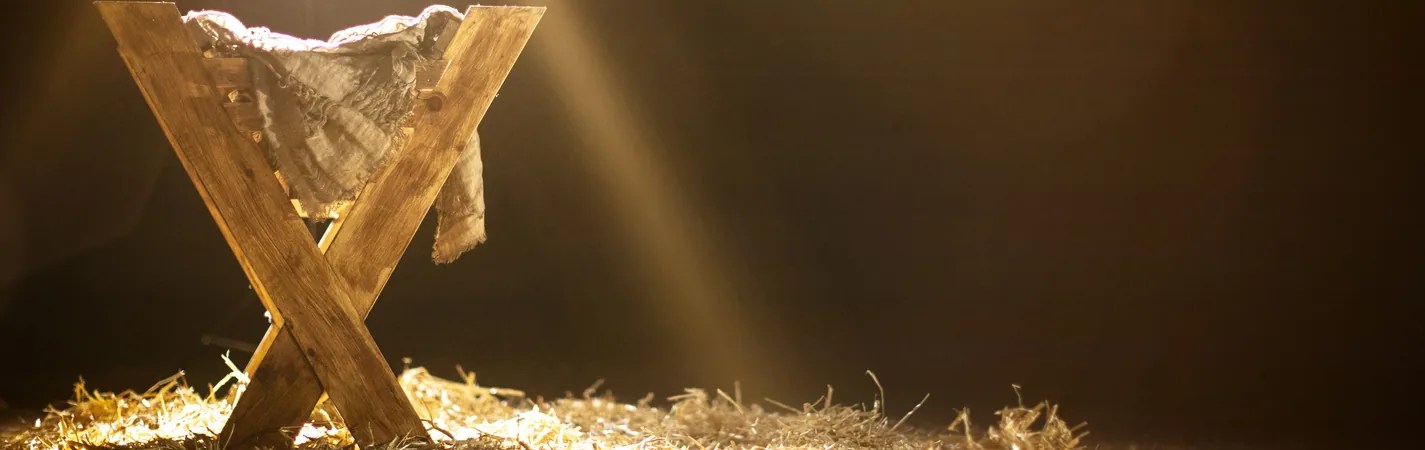
The Creator completed his program for dwelling among us in a most unlikely way. He came to dwell among as the Word of God, the second person of the Holy Trinity. He came into human flesh to make himself at home in a body just like ours, in a little town like the villages or neighborhoods in which we grew up. The King of Israel, David, carried God’s promise that he would come among us as the king’s descendent, who would be born in the king’s home town of Bethlehem. He came at a critical time in the history of God’s people and of the people of the entire Mediterranean world. He became the critical turning point in the history of all the people of human history, for he came into a world in which light was dimming and life was thinning. Peace and hope lay beyond human imagination as the lights seemed to be going out all over, and the warmth of the last embers were turning cold.
The thistles and thorns that had infested the earth from the time Adam and Eve doubted the Word of the Lord in Eden then ended up being implanted in the head of our God, who had come to dwell among us. His dwelling here took to himself also his dying as a person pierced by thorns and thistles, to say nothing of spear and nails. He not only was dwelling among us. He came to reside in the last abode of our sinful life, in the grave. The Creator of life was given into death. The Creator of stone was deposited as a corpse in a crypt.
Early Christians took over a term from inter-testamental Judaism, “shekinah,” which designated certain places where God dwelt among his chosen people and was associated with his glory. The paradoxical in the Christian proclamation is that God dwells most closely with us as he shares the condemnation of our sinfulness in the sentence of death. But it is indeed there that God’s glory is fully and clearly revealed to the eyes of faith, to the ears who listen to the Lord.
For in His supreme sacrifice on the cross Jesus Christ has shown that God is most glorious because he has not dwelt wherever he might have been before he said the “let there be of this world.” His glory comes to full display in his sticking with us, remaining at home with us, being our “God with us,” into death, even the death of the cross.
Thus, winter turns to spring. Not only thorns and thistles have lost their sting. Death itself has lost its sting (1 Corinthians 15:54-57). The glory of God becomes visible in the cross, for the immensity of the love of this Creator who has dwelt among us from the beginning in various ways there becomes clear. The glory of God becomes visible in its follow-up, as the tomb bursts open, and the immensity of the love of this Creator who has dedicated himself to the final liberation of his people comes into sharp focus.
From the first light of Eden to the last light of Christ’s return God has been with us. His shekinah among us became most clear in the dying and the rising of Jesus, Immanuel, God with us, now and forever.